Fort Lauderdale Multifamily Investing: Duplexes and Triplexes
July 9, 2026
July 9, 2026
Thinking about buying a Fort Lauderdale duplex or triplex as your first small multifamily property? You are not alone. For many buyers, these properties offer a practical way to enter the market, create rental income, or live in one unit while renting the others. The key is knowing how Fort Lauderdale classifies these homes, how to evaluate the numbers, and where deals can go wrong. Let’s dive in.
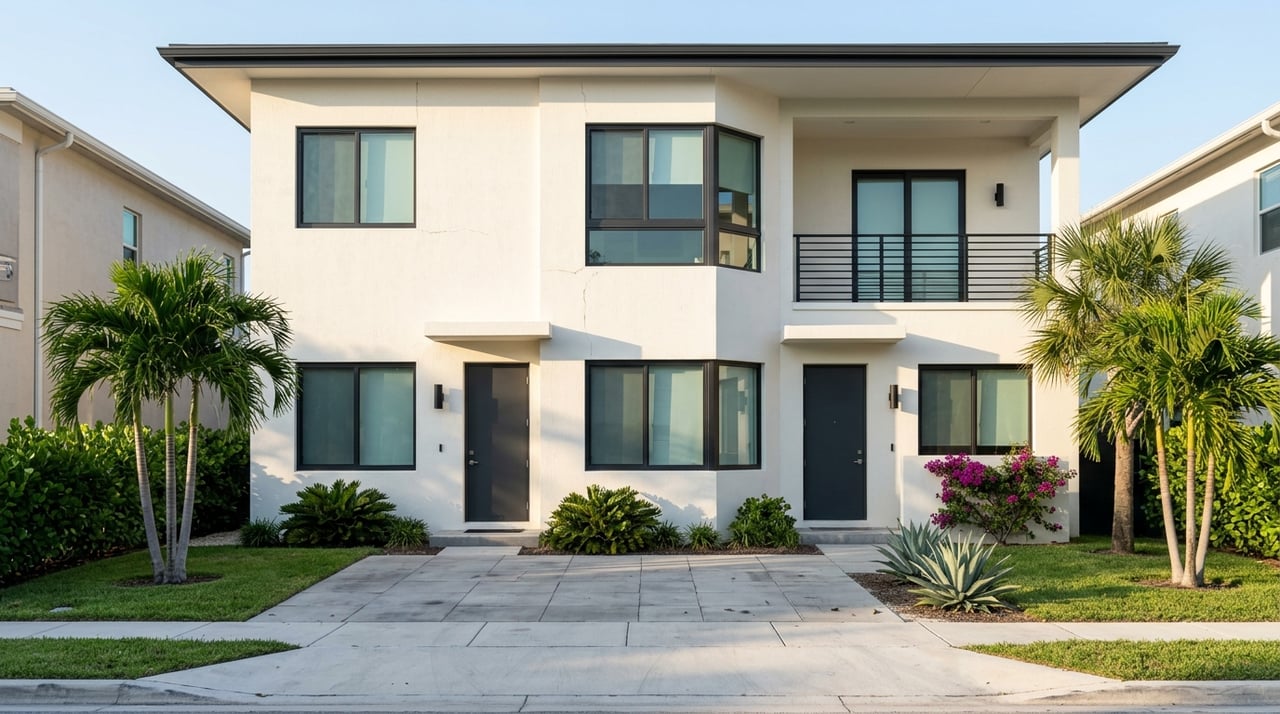
In Fort Lauderdale, a duplex is defined as a single building with two residential units, either side by side or stacked one above the other. A triplex typically falls under the city’s broader multifamily category, which covers buildings designed for occupancy by three or more families.
That distinction matters because a property is not just about how it looks. It is also about whether the use is legally allowed on that parcel. Before you get too attached to a listing, you want to confirm that the unit count matches the property’s zoning.
Fort Lauderdale separates duplex and multifamily uses into different zoning districts. The research points to districts such as RD-15 for single-family and duplex uses, and RM-15, RML-25, RMM-25, RMH-25, and RMH-60 for multifamily uses.
In simple terms, a building with two or three units may seem straightforward, but the legal use still needs to line up with the parcel’s zoning rules. Lot size, density, setbacks, access, and similar requirements are controlled by the underlying district, so this is one of the first checks you should make during due diligence.
The City of Fort Lauderdale directs buyers and property owners to use its Property Reporter GIS and zoning verification process for parcel-specific checks. For a starter buyer, that means you should treat duplex or triplex status as a legal and zoning question, not just a layout question.
Fort Lauderdale’s broader housing market gives you some useful context. Redfin reports a citywide median sale price of $582,152 over the last three months, with homes selling in about 100 days and receiving roughly two offers on average. Realtor.com describes the city as a buyer’s market and says homes sold for 5.08% below asking on average in May 2026.
Those figures are not specific to duplexes and triplexes, but they help frame expectations. In a market with more negotiation room, you may have a better chance to structure favorable terms, especially when a property has been sitting or needs updates.
Current active small multifamily listings show a wide asking range. Examples in the research include listings around $545,000 in northwest Fort Lauderdale, $825,000 in Poinsettia Heights, about $1.029 million for a three-unit property in the 33334 area, and more than $2.1 million for a larger Harbor Heights multifamily listing.
The lesson is not that every duplex or triplex should fall into one price bucket. The lesson is that small multifamily pricing in Fort Lauderdale can vary sharply based on location, condition, unit mix, and income potential.
For a first pass, local rent data can help you build a rough income picture. Zillow reports an average Fort Lauderdale rent of $2,700, with average rents of $1,850 for one-bedroom units, $2,600 for two-bedroom units, and $4,250 for three-bedroom units across property types.
If you use the citywide two-bedroom average as a rough illustration, a duplex with two similar two-bedroom units could gross about $5,200 per month. A triplex with three similar two-bedroom units could gross about $7,800 per month before vacancy and operating costs.
That does not mean every property will perform at those levels. Unit condition, renovations, parking, location, and tenant turnover all affect achievable rent. Still, those figures give you a practical starting point when comparing listings.
The broader Broward multifamily market also offers some context. Cushman & Wakefield’s Q1 2026 Broward report shows average effective rent per unit of $2,445 countywide and $3,049 in Central Fort Lauderdale, with stabilized occupancy at 93.5% countywide and 94.4% in Central Fort Lauderdale. Those numbers reflect larger apartment properties, not duplex and triplex comps, but they do suggest steady rental demand in the area.
A lot of first-time buyers focus too heavily on asking price. A better approach is to focus on whether the property can support your goals after real expenses are factored in.
The research defines net operating income, or NOI, as total effective gross income minus operating expenses. Cap rate is then calculated by dividing NOI by the asset value. You do not need to be a full-time investor to use these ideas. You just need to understand that rent on paper is not the same as money in your pocket.
When you underwrite a duplex or triplex, look beyond gross rent and ask:
This kind of stress test helps you avoid deals that look attractive online but feel tight once real ownership costs show up.
If you are just getting started, you do not need a perfect spreadsheet on day one. You do need a consistent process.
Here is a practical way to screen a Fort Lauderdale duplex or triplex before you go deeper:
This process can save you time and help you focus on properties that have a stronger chance of working both legally and financially.
Small multifamily properties can look simple, but they often require more verification than a standard single-family purchase. In Fort Lauderdale, that is especially true when a property sits near a zoning boundary, has an unusual layout, or appears to have added units.
Based on the research, your due diligence checklist should include:
These steps matter because a property that is marketed as a duplex or triplex may still need legal-use confirmation. If the legal use is off, your financing, insurance, or future resale plans can get complicated fast.
For many first-time buyers, the appeal of a duplex or triplex is simple. You live in one unit and rent out the others to help offset your housing costs.
If that is your plan, the research notes that Florida’s homestead exemption is tied to legal title and a good-faith permanent residence on January 1, and it applies only to owner-occupied residential property. That makes occupancy plans another reason to confirm legal use, title structure, and timing early in the process.
In Fort Lauderdale, the best opportunities are not always the obvious ones. Sometimes the value is in a property with upside that only works if the zoning checks out, the rents are supported, and the repair budget is realistic.
That is where an investment-minded local advisor can help. Instead of looking only at the list price, you want someone who can help you weigh legal use, income potential, negotiation room, and the likely path to closing.
Klaus Gonche’s approach fits that need well. With a background that emphasizes financial analysis and a strong focus on Broward County, he helps buyers and investors move beyond surface-level listing details and make decisions with more clarity and confidence.
A duplex or triplex can be a smart entry point into Fort Lauderdale real estate, whether you want rental income, a house-hack setup, or a small investment property. But the right deal is not just about finding a building with multiple doors. It is about confirming the legal use, underwriting the income carefully, and making sure the property fits your timeline and budget.
In today’s market, there may be room to negotiate. The strongest buyers use that opportunity wisely by doing the zoning work first and letting the numbers lead the decision.
If you want help reviewing a Fort Lauderdale duplex or triplex opportunity, connect with Klaus Gonche for a quick consult or local market guidance.
Stay up to date on the latest real estate trends.